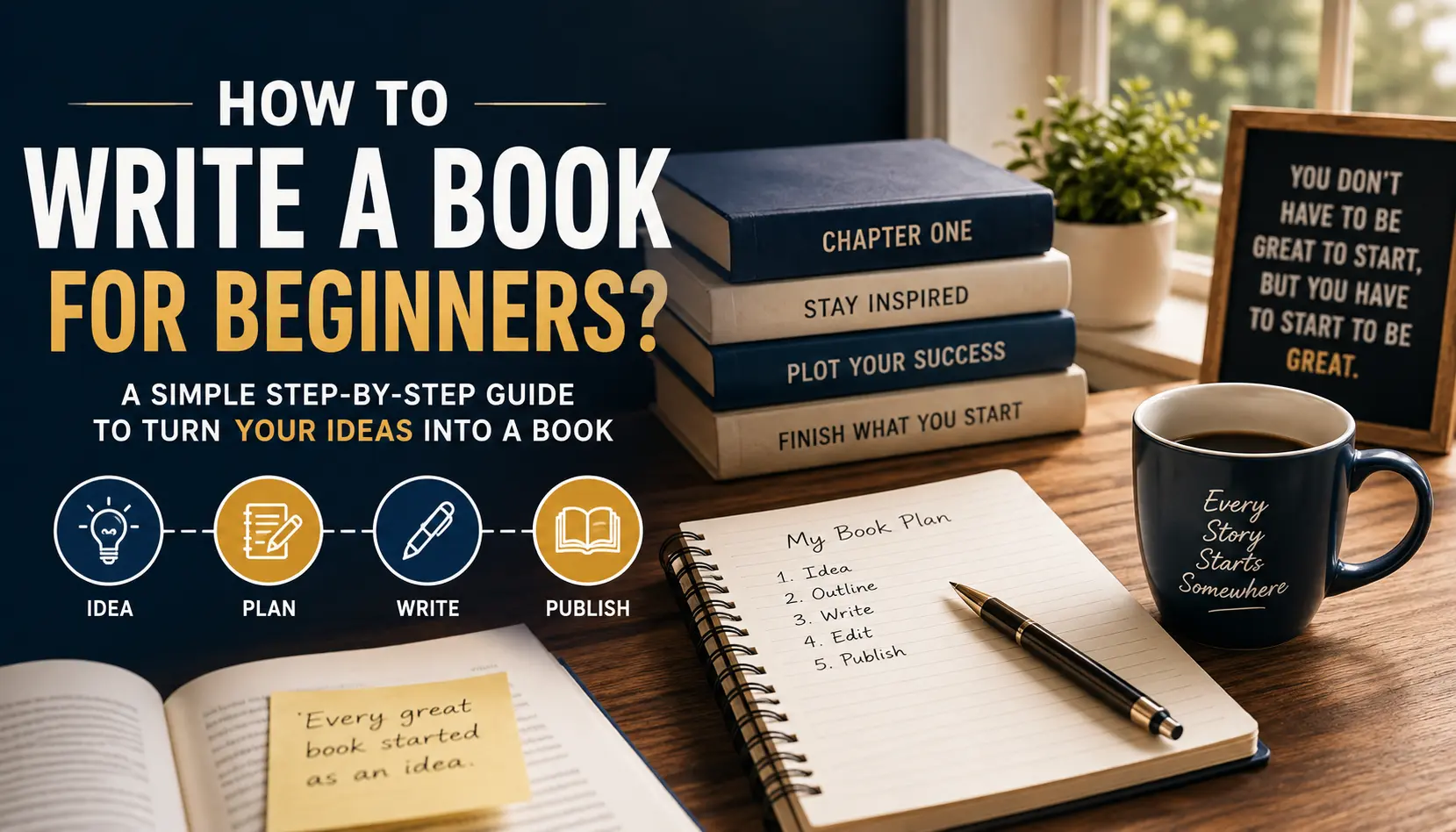

Writing a book may seem like a huge challenge, especially if you’ve never done it before. Many aspiring authors have a great idea but struggle to turn it into a finished manuscript. The good news is that every bestselling author started as a beginner.
Whether you dream of writing a novel, memoir, self-help book, or business guide, success comes from following a clear process rather than waiting for inspiration. This guide will show you exactly how to write a book for beginners, from choosing your idea to preparing your manuscript for publication.
📌 Need professional guidance for your manuscript?
What Does It Take to Write a Book?
💡 Featured Snippet Answer:
Writing a book requires a clear idea, a structured outline, consistent writing habits, editing, and patience. Beginners don’t need to be expert writers—they need a plan and the commitment to keep writing until the manuscript is complete.
Many new writers believe they need perfect grammar or years of experience before starting. In reality, writing is a skill that improves with practice. Your first draft doesn’t need to be perfect—it simply needs to exist.
Step 1: Choose a Book Idea
Every successful book starts with a strong idea. Instead of trying to write about everything you know, focus on one central topic or story.
Ask yourself:
- What knowledge can I share?
- What story do I want to tell?
- Who will benefit from reading this book?
- What problem does my book solve?
Choose an idea you’re excited about because you’ll spend weeks or months developing it.
Step 2: Understand Your Readers
Before writing, think about the people who will read your book.
Ask questions like:
- How old are they?
- What challenges do they face?
- What information are they looking for?
- What type of writing style do they enjoy?
Understanding your audience helps you write content that connects with readers and keeps them engaged.
Step 3: Create a Book Outline
One of the biggest mistakes beginners make is starting without a plan. A book outline acts as your roadmap.
A simple outline may include:
- Introduction
- Chapter 1
- Chapter 2
- Chapter 3
- Conclusion
For fiction, outline major events and character development.
For nonfiction, list the topics each chapter will cover.
An outline saves time, reduces writer’s block, and keeps your ideas organized.
Step 4: Set a Realistic Writing Goal
Writing a book doesn’t require eight hours a day. Small, consistent progress is more effective.
For example:
- 500 words per day
- 1,000 words every weekend
- One chapter each week
If you write just 500 words daily, you can finish a 60,000-word manuscript in about four months. Consistency matters far more than speed.
Step 5: Write Your First Draft
The first draft is where you transform your ideas into words without worrying about perfection. Focus on finishing the manuscript instead of editing every sentence as you write. Many writers stop because they constantly rewrite the same page.
Instead:
- Keep moving forward.
- Ignore small mistakes.
- Leave notes for sections you’ll improve later.
- Finish the draft before editing.
Remember, you can’t edit a book that hasn’t been written.
Step 6: Develop Strong Characters or Valuable Content
If you’re writing fiction, create believable characters with clear goals, strengths, and weaknesses.
If you’re writing nonfiction, make every chapter practical by including:
- Examples
- Stories
- Actionable tips
- Real-life experiences
Readers remember books that provide value or create emotional connections.
Step 7: Show, Don't Just Tell
Instead of writing:
Sarah was nervous.
Write:
Sarah’s hands trembled as she reached for the door handle.
Using descriptive writing helps readers experience the story instead of simply reading about it. For nonfiction, replace vague statements with examples, statistics, or case studies whenever possible.
Step 8: Edit Your Manuscript
After finishing your draft, take a short break before editing. During editing, look for:
- Grammar mistakes
- Repetitive words
- Weak sentences
- Plot holes
- Inconsistent formatting
- Unclear explanations
Professional editing can significantly improve your book’s quality before publication.
📌 Need expert editing?
Step 9: Design a Professional Book Cover
People often judge books by their covers. A professional cover should:
- Match your genre
- Have an easy-to-read title
- Look great as a small thumbnail
- Create curiosity
An attractive cover can improve click-through rates and sales.
📘 Need an attractice book cover?
Step 10: Prepare Your Book for Publishing
Once your manuscript is complete, you’ll need to:
- Format the interior
- Obtain an ISBN (if needed)
- Choose between self-publishing and traditional publishing
- Upload your files
- Create your book description
- Plan your marketing strategy
Publishing is much easier when every step is completed professionally.
📘 Need professional guidance after completing your manuscript?
Common Mistakes Beginners Should Avoid
- Starting without an outline
- Editing while writing
- Skipping professional editing
- Using an unprofessional cover
- Giving up too early
- Ignoring reader feedback
- Publishing without a marketing plan
Avoiding these mistakes can save time and improve your chances of success.
Final Thoughts
Learning how to write a book for beginners is less about talent and more about consistency. Every finished book starts with a single page, and every successful author once faced the same doubts as you.
Focus on writing regularly, follow a clear outline, and don’t let perfection stop your progress. Once your manuscript is complete, invest in professional editing, design, and publishing support to give your book the best chance of success.
📘 Ready to turn your manuscript into a professionally published book?
The Creative Book Publishing Has All The Answer You Wants?